The Sea Lion Caves: The Best Oregon Coast Stop I Didn’t Plan
I’m no good at spontaneous road trips.
I micromanage everything. From ensuring rainy coastal roads are paired with moody Bon Iver playlists to Trip Advisor searching restaurants for the next three meals- no part of an excursion is a surprise if I’m in the passenger seat. So, when I embarked on a West Coast road trip with a license-free friend and was assigned the role of driver for the entire journey, I felt strangely impaired. My once frenzied thumbs felt absolutely helpless wrapped around the steering wheel.
I’ve grown used to Googling landscapes as I speed through them. Relishing destinations rather than journeys and focusing on others ’24 hours in Random Cities Lists’ rather than experiencing my own. When the war against Geotagging broke out I was strongly on the offensive – how would I make the most of my Weekend Warrior expeditions if I was going out blind? How could anybody?
So when my shotgun riding partner refused to scour blogs, yelp, and google reviews I was furious, and a little scared. We were just wasting our time without this beta. We couldn’t just blindly drive onward with no plan, or direction- we would miss everything worth seeing. We fought for a bit, and settled into silence along the Oregon Coast.
We stopped at all the destinations I had bookmarked before we left Washington: explored the sea stacks at Cannon Beach, sampled all the cheeses and gotten sick off too much ice cream at The Tillamonk Factory, drove on the beach in Cape Kiwanda. And then I drove onward, further out of my element.
Somewhere south of Yachats, Oregon we enjoyed what felt like our millionth stop of the day. Every pullout lead to a spot more scenic then the previous, and I was absolutely terrified of missing anything important. The hours of the day were quickly sweeping by and we realized we had to keep moving if we wanted to make it to our destination for the night at a reasonabile time. As soon as we promised no more stops a giant circus sign sprang into view around a corner. Sea Lion Caves! It yelled at us. America’s Largest Sea Cave! It proclaimed. We forgot all promises made seconds before.
Parking was difficult in the busy lot, our arguments forgotten with silly excitement. We entered the musty gift shop, filled to the brim with salty air and souvenirs no one needs but everyone buys. A teenager who remarkably managed to still overflow with excitement for his daily job asked us for $14.00 each while eagerly informing us the cave was near capacity today – it was a wonderful day to visit.
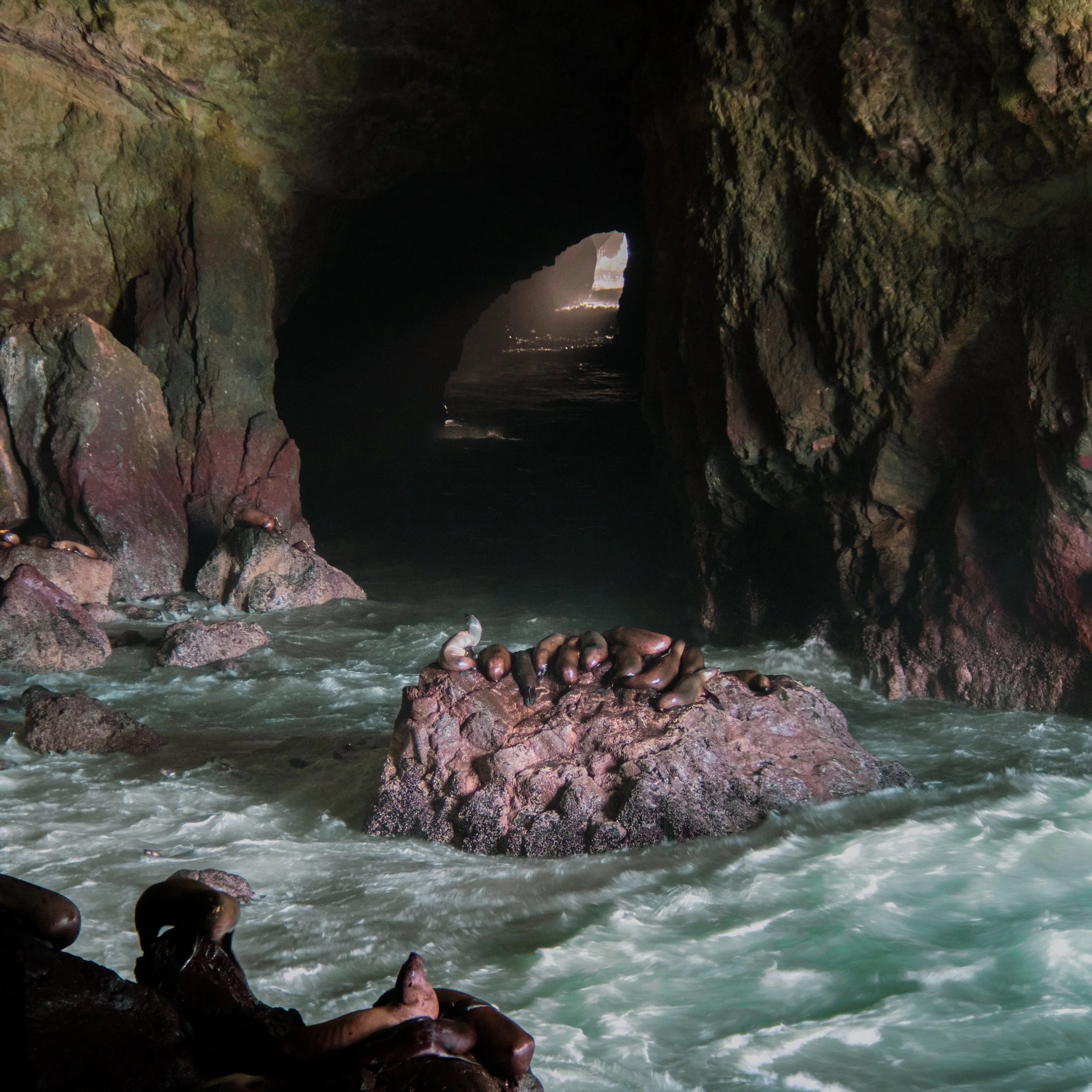
We took the elevator down to the grotto and as the doors opened a rumbling roar of barking and breaking waves reached our ears before the smell reached our noses. Hundreds of Stellar Sea Lions filled the rocky bottom of the massive cave. 2,500 pound and ten foot long bulls fought over females as babies screamed for their mother’s attention.
In the sheer magnitude of their numbers paired with the enormity of the caves almost made these colossal animals look like ants. We watched them from above, a wire fence protecting all of us from each other. Light streamed in from a large opening to our right, and the delicately layered caves straight ahead. Red, greens, pinks and purples of various lichens, algae’s and minerals stained the cool cave walls. The entire place pulsated with life, beauty and energy.
As we watched the animals, we wondered what it must have been like to be the first people to discover this 12 story tall, 2 football field’s deep cave in 1880. We learned it was first opened to the public in 1932. It is still privately owned, operating as a Wildlife Preserve and Bird Sanctuary.
As we left the roar of the stellar sea lions bouncing off the cave walls, and made our way up the steep walkway the cold air bit our cheeks. We imagined what it would look like to see Orcas battling the bulls along this rugged coastline like the plaques told us sometimes happened. We were invigorated, our previous disputes forgotten.
If I had been in the passenger seat, I undoubtedly would have seen the caves on some ‘Bucket List Oregon Coast Roadtrip’ blog post. I would have scoured the photos, reading all the information, and set my expectations. I would have known the photos I wanted and ensured we got there plenty of time before closing. Instead however, I had a magical moment of discovery, walking completely into the unknown. The cave far exceeded unset expectations. Yeah, it really would have sucked if we had driven by at 4:03pm and missed everything, but we didn’t, and I experienced one of the most memorable, unplanned moments of that two week trip.
Planning a Visit to the Sea Lion Caves
The story above reflects what we paid and experienced during our trip. Prices, hours and wildlife sightings have changed since then.
Location: Sea Lion Caves is on Highway 101, about 11 miles north of Florence, Oregon.
Current admission: As of September 2026, admission is $18 for adults, $17 for seniors, $12 for children ages 5–12 and free for children four and younger. We paid $14 when we visited.
Hours: The caves generally open daily from 9 a.m.–5:30 p.m., with some holiday and weather closures. Check the official hours and ticket information before driving over.
Reservations: Reservations are not currently required, and parking is free.
Wildlife: This is not a zoo. The sea lions are wild and come and go. They are generally more likely to use the cave during winter and spring and gather on the rocky ledges outside during summer.
Accessibility: The elevator reaches the cave, but the overall visit still requires 37 steps, about 400 yards of steep walking and additional stairs for the lighthouse viewpoint. Review the official accessibility information and FAQs before visiting.
What to bring: Wear layers and sturdy shoes. Bring binoculars if you have them. The Oregon Coast changes its mind about the weather frequently.